From the campfire to the big screen, humans have told stories since the beginning of time.
Stories have always been used to teach, entertain and persuade. They’re one of the most effective ways to connect with other people. And for cause-based communication, stories are the most powerful tool we have.
Before getting started on campaign planning, it’s important to check that you’ve gathered the right ingredients.
Putting together a great case study involves 3 key elements:
Identifying the right story
Pinpointing the right images
Asking the right questions.
Checking these off your prep-list will equip your creative team with the ingredients we need to tell a powerful story.
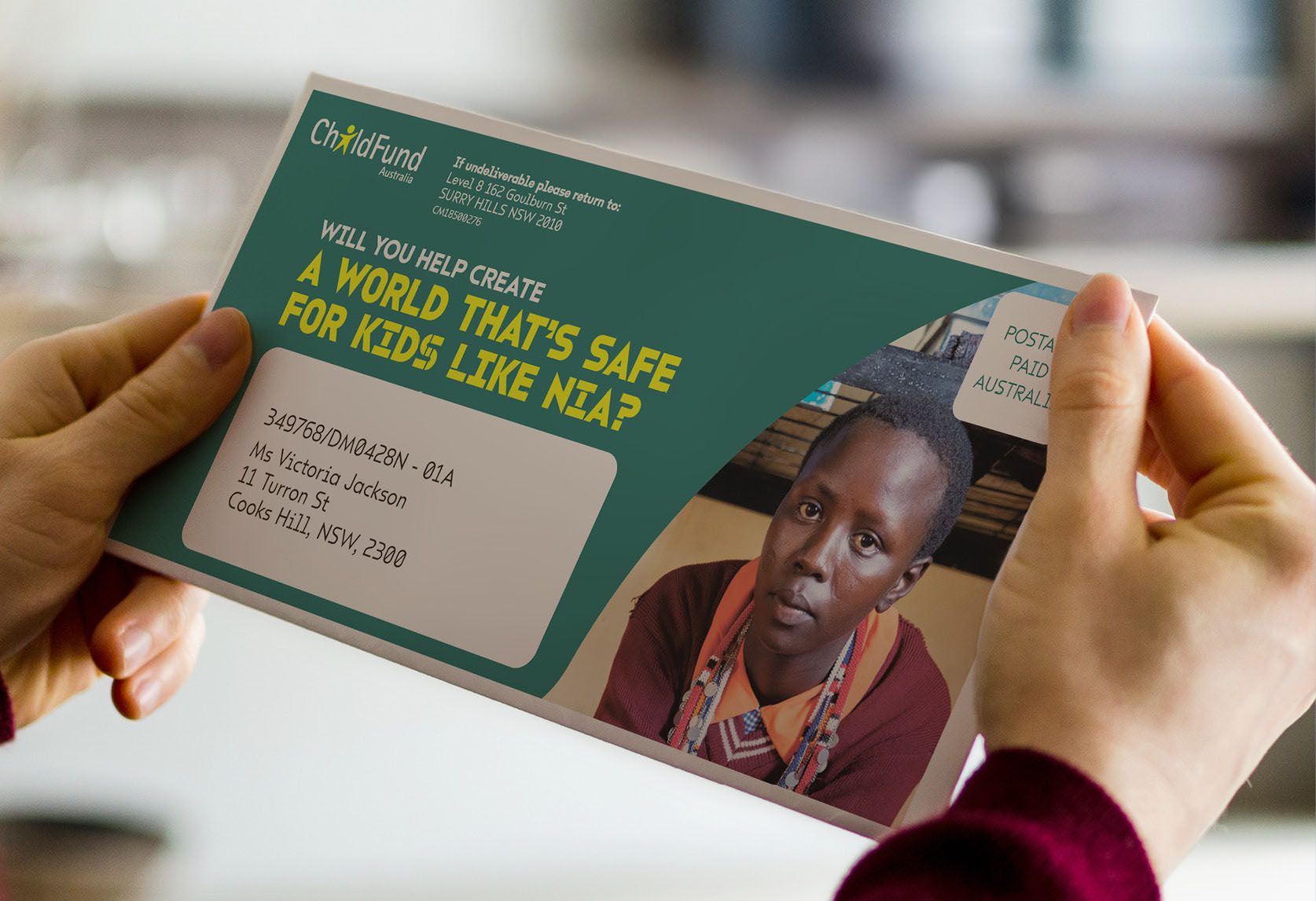
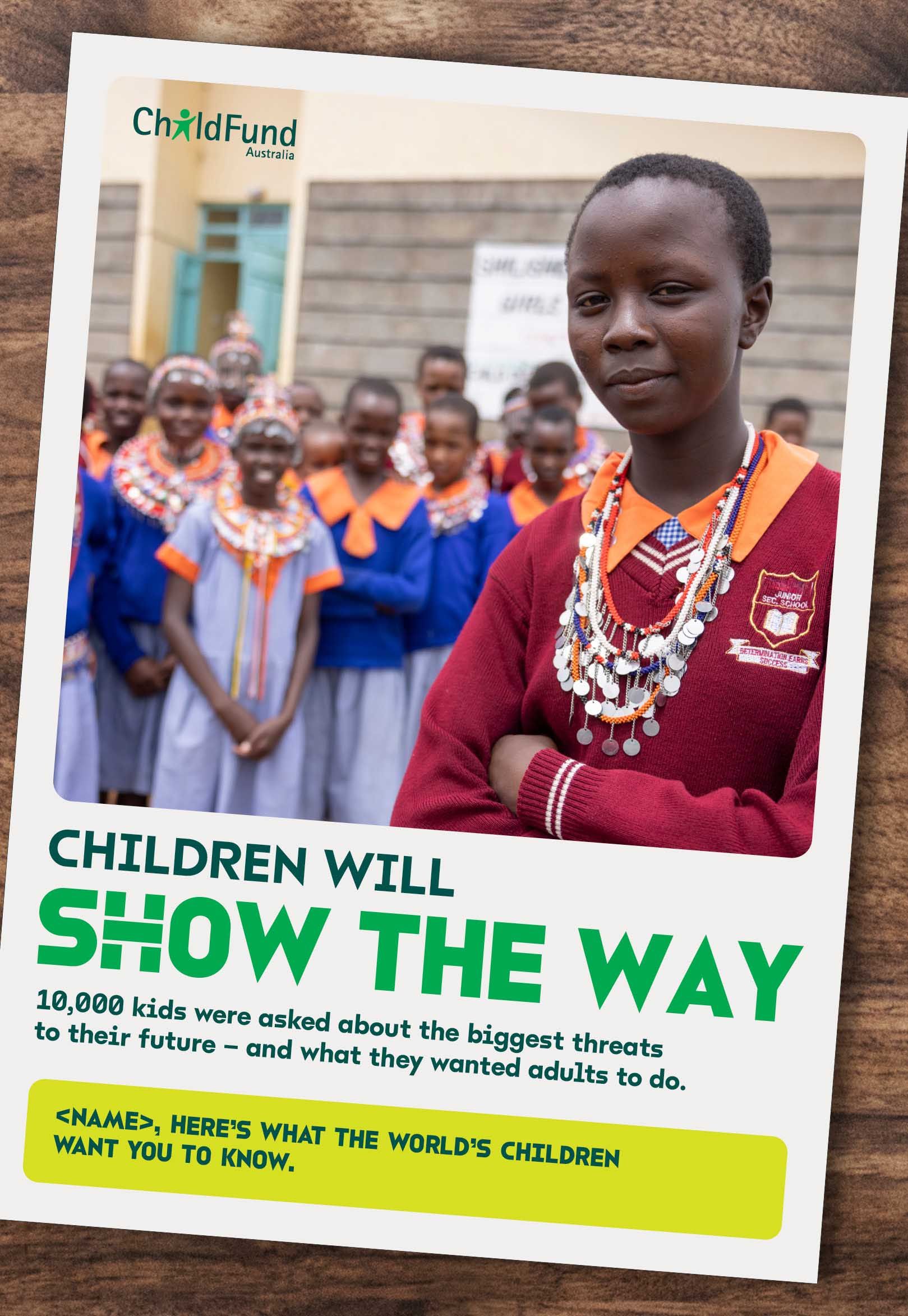
NIA’S CASE STUDY WAS FRAMED AS TEASER COPY ON THE OUTER ENVELOPE FOR CHILDFUND’S TAX CAMPAIGN. IMAGE © TONE STUDIO
1. Identifying the right story
Good storytelling is arguably the most important aspect of a compelling fundraising or awareness campaign.
Stories remind us that we’re all humans. No matter where we live, we all feel. We all have the same fundamental needs. And we all have the same human rights.
The case study you choose to profile should be a strong representation of your campaign focus or theme. Ideally, the concept will emerge from the story, rather than trying to make the story fit the campaign.
A strong case study will:
Humanise your cause
Make people understand, relate and empathise
Motivate them to act in response.
You may find yourself sifting through pools of potential case studies and getting overwhelmed. Or you might find you don’t have much to work with at all.
It’s important that you know how to assess whether you have the required elements that make up an emotionally strong story. One that will be able to carry your appeal.
And it’s essential that you gather your stories ahead of time, so you’re not left scrambling as your deadline looms.
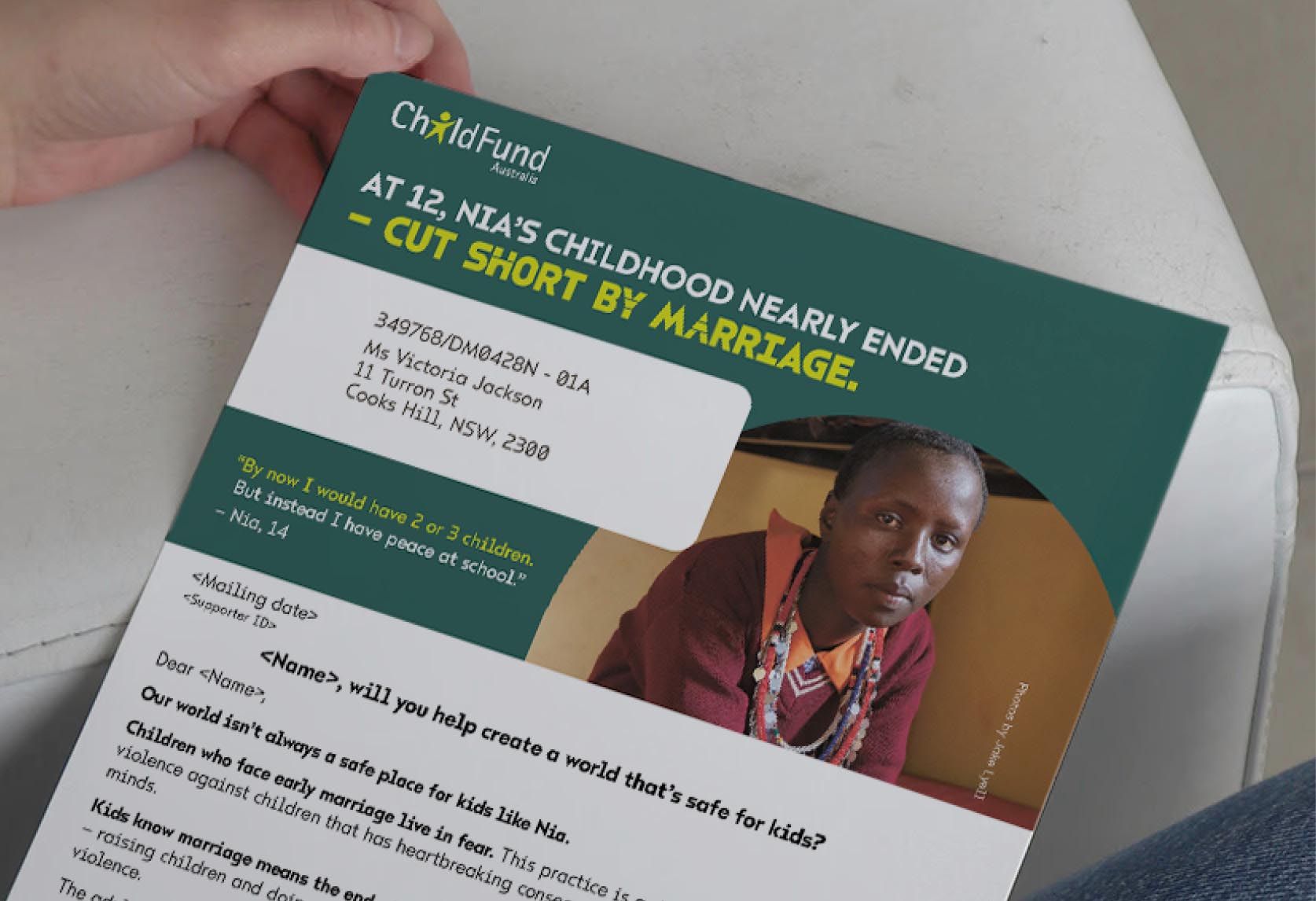
THE LETTERHEAD FOR CHILDFUND’S 2026 DIRECT MAIL TAX CAMPAIGN FEATURED A STRIKING QUOTE FROM NIA, CENTRING HER VOICE IN THE STORYTELLING. IMAGE © TONE STUDIO
When considering a potential case study, you’re looking for a story that has:
Emotional depth donors can connect to
Enough tension to motivate people to act
A direct link to the service or program you’re fundraising for – i.e. clear evidence of the impact the donor’s gift will make.
The first thing the writer on your campaign will look for is direct quotes from the people whose story we’re telling. Powerful first-person descriptions – their story in their own words.
We’ll also need key context/ background info that will help us – and your audience – connect to the story and your cause.
Ultimately, we’re looking for stories that paint a picture of transformation. Stories that show both the need and the life-changing impact that donations can make.
Getting your case study interview right is essential to a high-quality campaign. Our expert team is available to help you to get the most out of your case study interview. We can support you by speaking directly with your case study or by crafting interview questions for your team to use.
If a fit-for-purpose interview can be conducted (ideally along with a photoshoot), interview questions should cover:
The Before – Descriptions of what life was like for the person before your organisation provided support.
The During – Their first-hand testimonial of what accessing your services has been like.
The After – How life is different now with the support of your organisation.
Remember, case studies that only scratch the surface (without supporting quotes and background) can feel shallow and tokenistic. At best, your campaign will be so-so. At worst, it could perpetuate stereotypes or disempower and dehumanise the people you’re aiming to help.

“When I’m writing a case study, I’m telling someone’s story. And it’s so important to do that with respect. Striking a balance between showing the need and honouring the person is a tricky line to walk – and something I take very seriously.”
– Tabitha, Lead Copywriter, Tone Studio

If you’re looking to tell an authentic and respectful story, Pledge for Change’s guide to ethical storytelling is a great place to start.
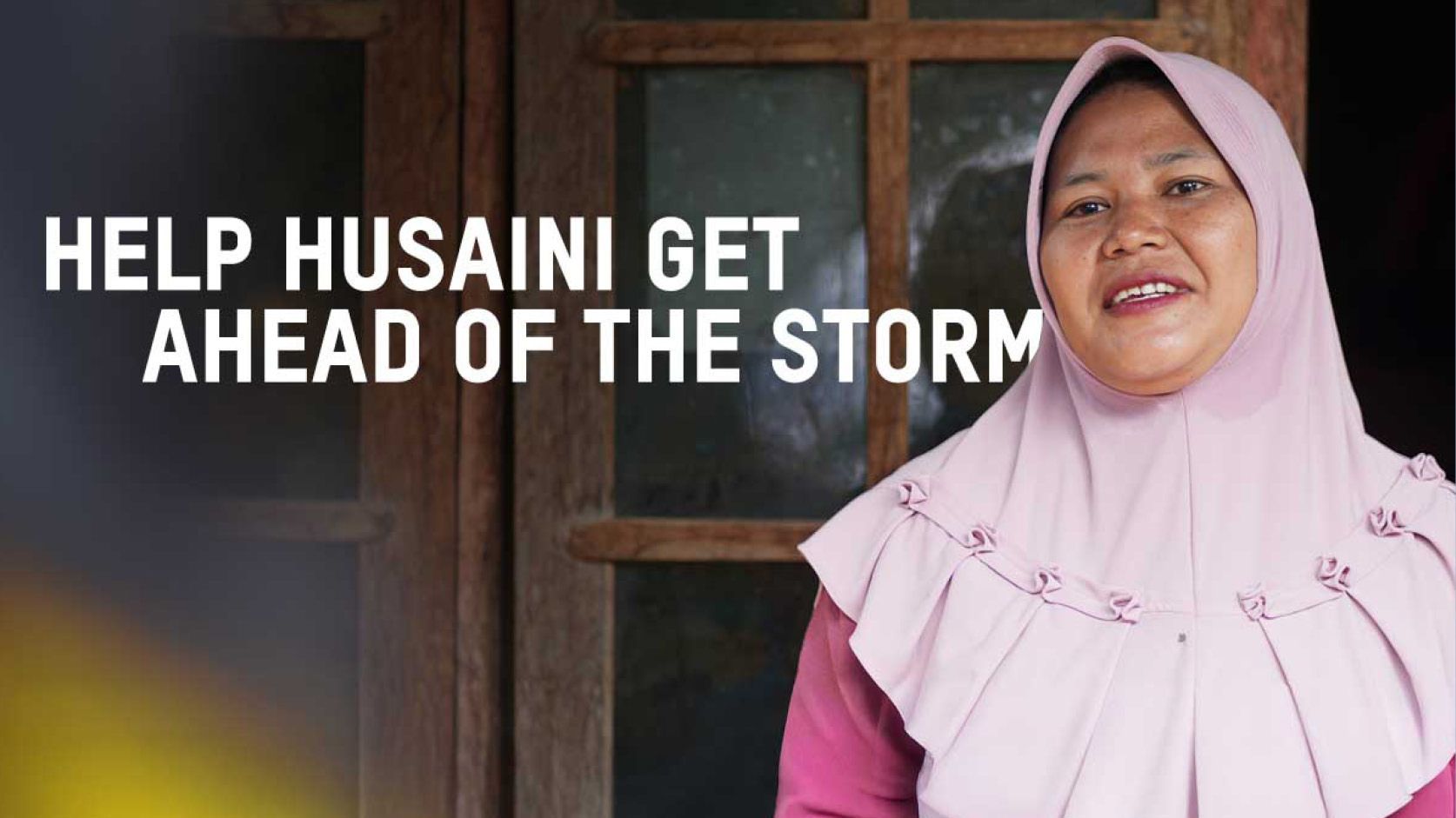
THE DETAILED CASE STUDY OXFAM AUSTRALIA PROVIDED MADE IT EASY FOR US TO TELL HUSAINI’S STORY FOR THEIR SUMMER CAMPAIGN. IMAGE © TONE STUDIO
2. Pinpointing the right images
Of course, a powerful case study is not just words, but words and images together.
If you’re hoping to tell a compelling story, it’s essential that you back it up with engaging images. And your imagery needs to tell the same story as your words.
When it comes to campaign imagery, Tone clients tend to fall into 2 camps:
Charities who can use photos of real people your organisation helps.
a) You have access to field or studio photographers for a coordinated photoshoot.
b) You ask the case study to supply their own images.
c) A mix of both.
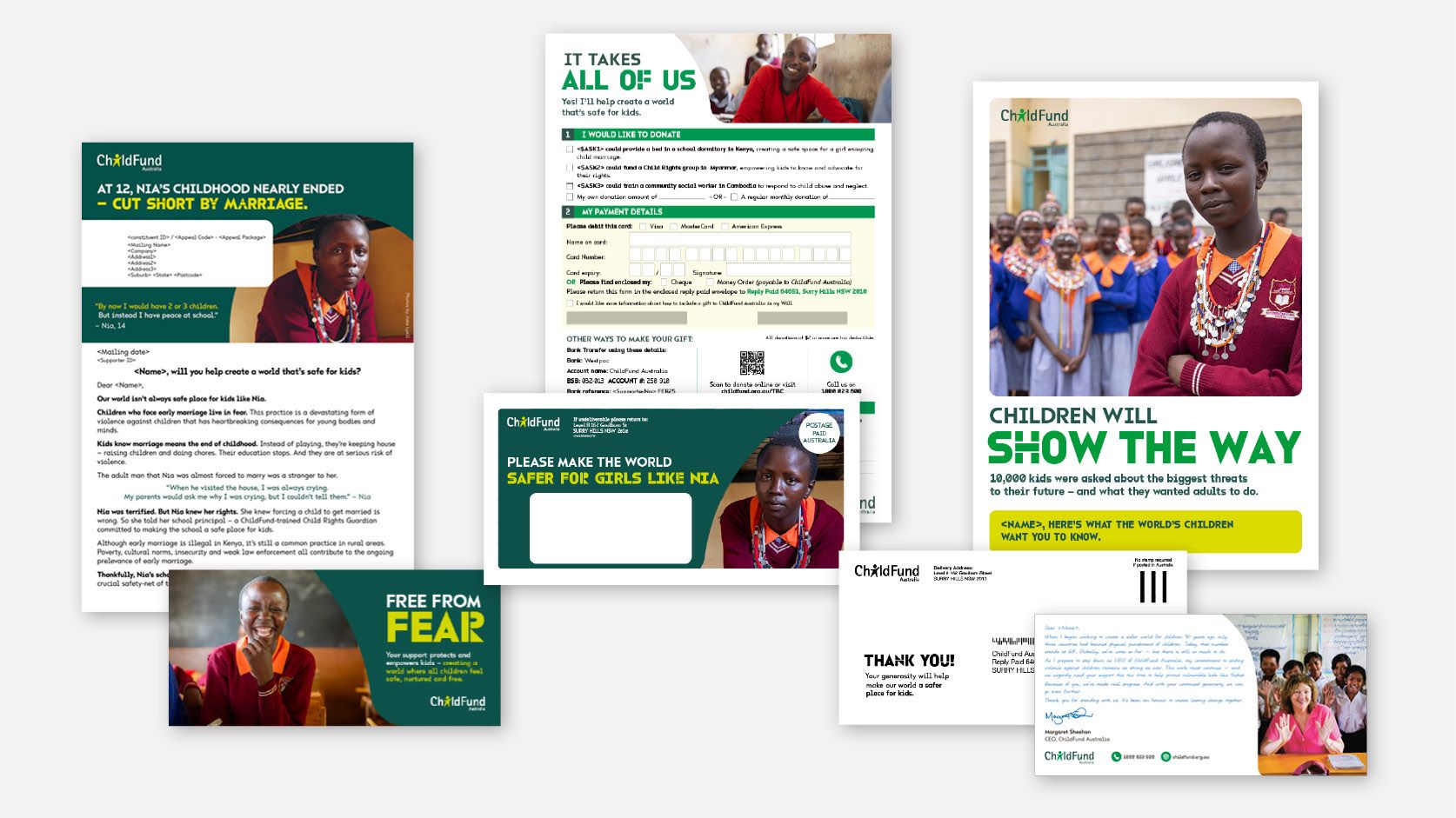
LOOKING AT CHILDFUND’S TAX APPEAL ON A PAGE, THE COHESIVE STORY IS CLEAR TO SEE. IMAGE © TONE STUDIO
Charities who can’t feature real people (e.g. to protect the identity of clients or the privacy of children). In this case, we need to find ways of visually representing the people your organisation supports. More on that below.
Depending on which camp your organisation is in, gathering strong case study images might involve:
Making the most of your existing image library
Coordinating a photo shoot (our team can help with this)
Working with one of our illustrators to visually represent the story
Purchasing high quality stock images
Considering thoughtful AI options that don’t perpetuate ‘poverty porn’
Asking the person in your story for access to their social media images.
Before sharing images with us, check they’ve been cleared to use in your campaign.
It’s essential that the people you feature give their consent. Your preferred images might also need the okay from your brand or marketing team. Copyright information and image credit should be provided at campaign kick-off too.
Before you share your brief with us, spend some time filtering your image options. Giving the creative team everything you have might not be the best approach. As experts on your cause, your guidance is invaluable.
Don’t forget your images need to align with the written story and quotes.
You should also check you have a large enough spread of imagery to tell the full story. That means images that show the ‘before’, ‘during’ and ‘after’ aspects of the story we discussed earlier.
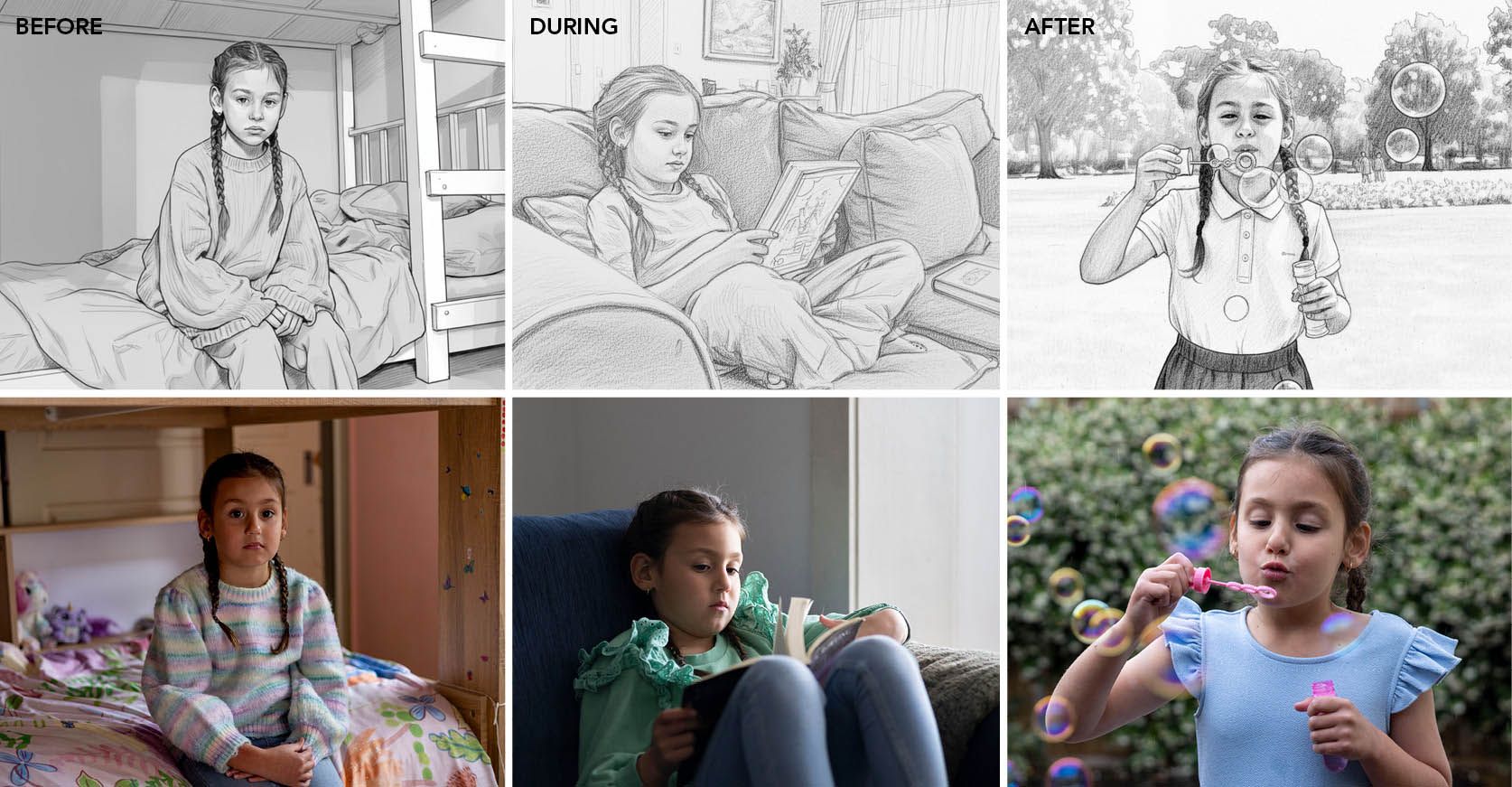
OUR TEAM PLANNED, STORYBOARDED AND DIRECTED THIS PHOTO SHOOT FOR THE BARNARDOS IMAGE LIBRARY. IMAGE © TONE STUDIO
Consider whether the images match the mood of the story too. For example, an image of someone smiling won’t work if they’re sharing a heartbreaking aspect of their story.
The last thing the creative team working on your campaign wants? Being supplied with a library of beautiful images that can’t be used, because we don’t know anything about the people featured. We’re left wishing, “If only this image came with a quote about the person’s life-changing experience with your charity.”
When you’re gathering images, keep in mind that:
Your shortlist should include a mix of candid and strong eye-to-camera shots.
Your feature images will need to be high resolution.
Supporting images can be lower resolution – our team has some clever workarounds for this.
You should be able to tell us the name, description and background story of the people you’re asking us to feature.
The time you spend curating a shortlist of images will pay off when it comes to delivering you the best possible campaign.
Tech tip: As a rule of thumb, a feature image will need to be larger than 200KB. If the person you’re featuring has supplied their own photos, ask for the original images. This means the file from their phone or camera. Images processed through social media or WhatsApp get truncated, reducing the resolution.
Read more: Crafting key visuals to create powerful campaigns.
3. Asking the right questions
Before you hand your case study materials over to our creative team, it’s worth pressing pause to complete our helpful checklist. Our copywriters and designers have created a list of questions that will help you quality-check your case study.
This case study checklist will mean we get the most out of your brief – so you can get the best possible campaign.
The checklist is available to Tone clients on our client portal, along with a suite of other helpful resources.
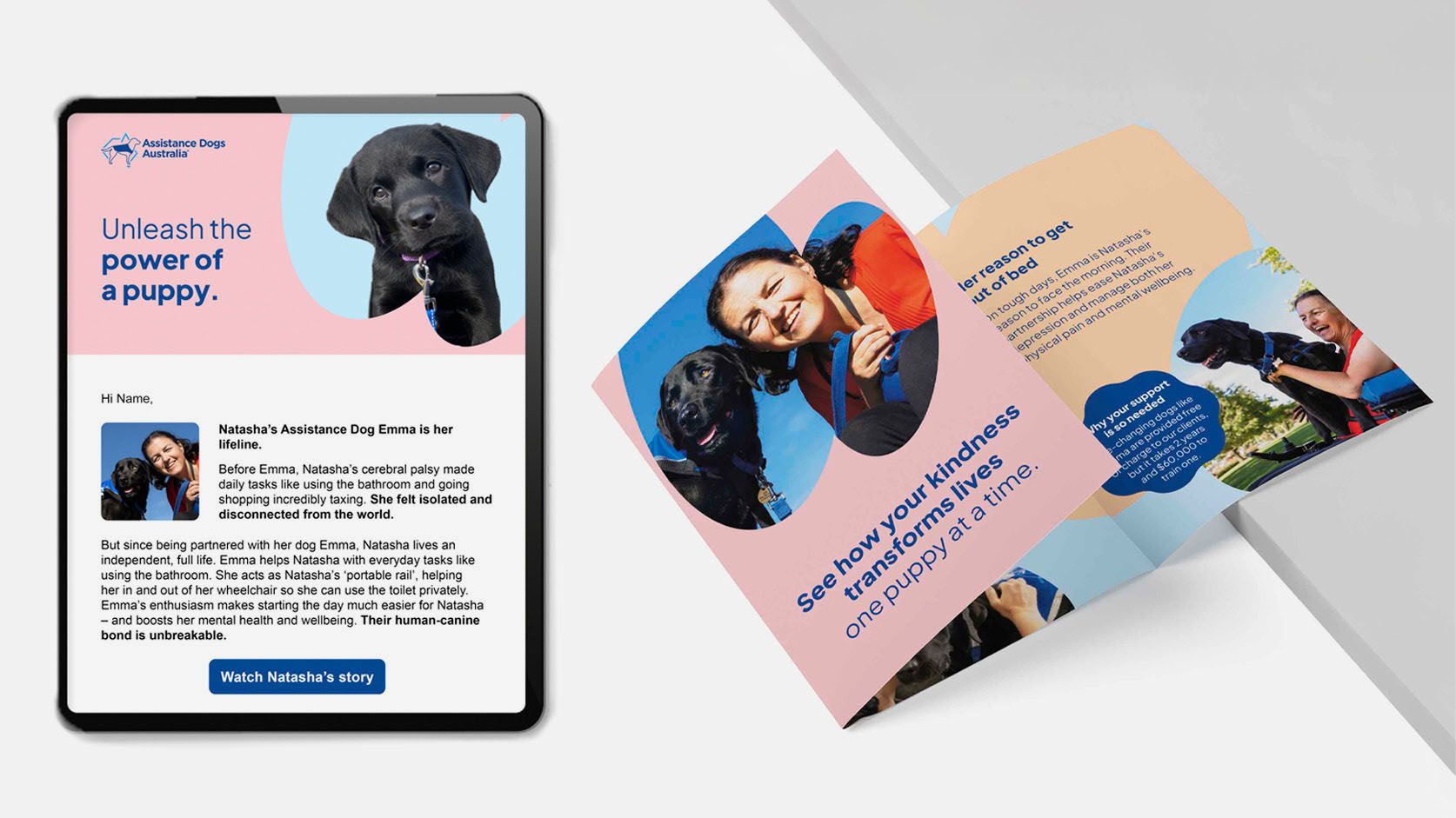
ASSISTANCE DOGS AUSTRALIA’S TAX CAMPAIGN TOLD THE STORY OF NATASHA AND HER BEAUTIFUL DOG EMMA. IMAGE © TONE STUDIO
Need a hand telling a compelling story?
Reach out to our team to plan your next campaign. You’re in good hands.